







Let me tell you about the worst Sunday morning of my life.
I woke up to my wife standing next to the bed, holding an empty coffee mug, her face completely white. The entire right side of our six-month-old mattress was soaked with coffee. Not just surface-level wet. We’re talking deep, seeping, spreading coffee that was already turning from brown to that sickly yellow color that screams “permanent stain.”
We’d spent $2,400 on that mattress. We’d researched for weeks, tested it in the store, waited for the delivery. It was perfect. Or it was perfect, until that coffee mug tipped over.
I grabbed towels. I tried blotting. I used every trick Google suggested. Baking soda, vinegar, hydrogen peroxide, dish soap. Nothing worked. The stain faded a little, but it was still there. Worse, the mattress smelled like sour coffee no matter what we did.
When I called the mattress company about the warranty, the customer service rep actually laughed. “Sorry, sir. Stains void the warranty. You should have been using a mattress protector.”
A mattress protector. Something that costs less than a hundred bucks would have saved us $2,400. I felt like an absolute idiot.
You’re Probably Making The Same Mistake Right Now
Here’s the thing that really gets me. I’m not alone in this. Most people don’t use mattress protectors. They spend serious money on a quality mattress, then leave it completely unprotected, like buying a new car and never getting insurance.
Think about your own bed right now. Is it protected? Really protected?
If you’re like most people, the answer is no. You’ve got sheets, sure. Maybe nice ones. But sheets don’t protect anything. They’re basically decorative fabric that sits on top while every spill, every drop of sweat, every accident soaks straight through into your mattress.
And your mattress is absorbing everything. The average person sweats up to a liter per night. Over a year, that’s nearly 100 gallons of sweat going into your mattress. Add in skin cells, dust mites (which love feeding on those skin cells), pet dander if you have animals, the occasional spill, and you’ve got a mattress that’s basically a petri dish of things you definitely don’t want to sleep on.
Still think you don’t need protection?
The Real Cost Of Going Unprotected
Let’s talk numbers for a second, because this is where it gets really clear.
The average decent mattress costs between $800 and $2,000. Premium mattresses can run $3,000 to $5,000 or more. You’re supposed to get 7 to 10 years out of that investment.
But here’s what actually happens without a mattress protector:
Scenario 1: The Spill
Your partner brings coffee to bed one Sunday morning. Or your kid sneaks juice into their room. Or you knock over a water glass reaching for your phone at 2am. The liquid goes straight through your sheets and into the mattress padding. Even if you clean it immediately, you’re left with a stain and probably an odor. Your warranty? Void. Your mattress? Permanently damaged.
Cost: $800 to $3,000+ for a replacement, depending on what you originally bought.
Scenario 2: The Pet Accident
Your dog has an upset stomach. Your cat gets sick. Your new puppy isn’t quite house-trained yet. It happens once, and your mattress is contaminated deep in the padding where you can’t clean it. The smell never fully goes away.
Cost: $800 to $3,000+ for a replacement, plus the ongoing discomfort of sleeping on a mattress you know is gross.
Scenario 3: The Gradual Breakdown
This one’s sneakier. No single dramatic incident. Just years of sweat, body oils, and dead skin cells breaking down the materials in your mattress. The foam deteriorates faster. The springs wear out quicker. What should have lasted 10 years barely makes it to 5.
Cost: Replacing your mattress 3 to 5 years early, which is like throwing away $1,000+.
Scenario 4: The Allergy Nightmare
Dust mites colonize your unprotected mattress by the millions. You start waking up congested, sneezing, with itchy eyes. Your sleep quality tanks. You assume it’s seasonal allergies and spend money on medications, air purifiers, doctor visits.
Cost: Hundreds in medical expenses and treatments, plus the incalculable cost of poor sleep affecting your work, health, and mood.
Add it all up, and going without a mattress protector is a gamble where you’re betting $1,000 to $3,000+ against a protection cost of under $100.
That’s not a smart bet. That’s just expensive wishful thinking.
But I’ve Never Had A Problem Before
I hear this one a lot. “I’ve had my mattress for three years and nothing bad has happened.”
Great! That’s awesome luck. Seriously.
But here’s the question: are you willing to bet your mattress on that luck continuing?
Because statistics aren’t on your side. Studies show that 80% of households experience at least one significant mattress-damaging event within the first five years of ownership. A spill, an accident, a pet incident, a sick kid, something.
The people who say “I’ve never had a problem” are either incredibly lucky, or they haven’t had their mattress very long, or they have had problems and just don’t realize the damage happening beneath the surface.
That sweat you don’t see? It’s there, breaking down your mattress foam right now. Those dust mites you can’t see? They’re there too, by the millions, living in your mattress and feeding off your dead skin cells.
Just because you can’t see the damage doesn’t mean it’s not happening.
The Old Excuses Don’t Work Anymore
I get it. Mattress protectors used to be terrible. I remember my grandmother’s mattress protector from the 1990s. It was basically a plastic bag that made horrible crinkling noises every time you moved. It trapped heat like a sauna. Sleeping on it felt like sleeping on a tarp.
No wonder nobody wanted to use them.
But here’s what’s changed: the technology has gotten incredibly better. Modern mattress protectors are nothing like those old plastic nightmares.
“They’re hot and uncomfortable.”
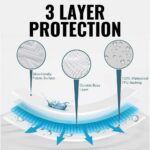
Not anymore. Today’s quality protectors use breathable materials that allow air circulation while blocking liquids. The waterproof layer is a specialized membrane that lets air through but stops water. You sleep at your normal temperature. Many people actually report sleeping cooler because the protector wicks away moisture.
“They make noise.”
Zero noise. Seriously. The crinkly plastic sound is from cheap protectors. Quality protectors are whisper-quiet. Your partner won’t hear a thing when you move.
“I can feel it under my sheets.”
You won’t feel anything. The surface is smooth and soft, just like a fitted sheet. Once your regular sheets are on top, you’ll completely forget it’s there.
“They’re expensive.”
Compared to what? A coffee maker? A nice dinner out? A single month of your streaming services? We’re talking about protecting an investment that costs hundreds or thousands of dollars. The protector is a one-time purchase that lasts for years.
The old excuses just don’t hold up anymore.
What Actually Makes A Good Mattress Protector
Not all protectors are created equal. The $15 one at the discount store isn’t the same as a quality protector, and the difference matters when you’re trying to protect a $2,000 mattress.
Here’s what to look for:
True Waterproof Protection
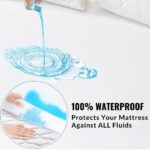
The protector needs a legitimate waterproof barrier, not just water-resistant. Water-resistant means it might hold off light moisture for a few minutes. Waterproof means liquids cannot penetrate, period. You want a protector that will stop a full glass of spilled wine or a pet accident, not just a few drops of water.
Breathability
The waterproof layer must allow air circulation. This is the crucial technology that separates modern protectors from old-school plastic bags. Look for protectors that specifically mention breathable membranes or moisture-wicking technology.
Proper Fit
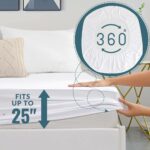
The protector should fit like a fitted sheet with deep pockets and elastic edges that stay secure. It needs to accommodate your mattress depth (most quality protectors fit mattresses up to 18 inches deep). If it doesn’t fit properly, it’ll shift around and leave parts of your mattress exposed.
Durability
You’re going to wash this thing monthly or more. It needs to hold up to repeated washing and drying without shrinking, tearing, or losing its waterproof properties. Quality protectors are pre-shrunk and built to last for years.
Allergen Protection
The fabric should be tightly woven enough to block dust mites, allergens, and bacteria. This is a bonus feature that comes with quality protectors and makes a huge difference for anyone with allergies or asthma.
Noiseless Design
It should be completely silent. If you’re trying to decide between two protectors and one makes any crinkling sound at all, choose the other one.
Our bed cover checks every single one of these boxes. It’s not the cheapest option on the market, but it’s the smart option. Because when you’re protecting a mattress that costs $1,000 or more, cutting corners on the protector makes no sense.
The Real-World Scenarios Where This Saves You
Let me paint some pictures for you, because this is where the value really becomes obvious.
The Toddler Transition
Your three-year-old is ready to move from a crib to a big kid bed. Potty training is going well during the day, but nighttime is still hit-or-miss. Without a protector, you’re looking at potential mattress damage from accidents. With a protector, accidents are just a laundry inconvenience. The mattress stays pristine. You wash the protector and sheets, and you’re done. No stress, no ruined mattress, no regrets.
The Pet Owner’s Insurance
Your dog sleeps on your bed every night. One night he gets sick or has an accident. Without a protector, you’re dealing with a contaminated mattress that will smell forever no matter how much you clean it. With a protector, the accident stays on the surface. You clean it up, wash the protector, and your mattress is still perfect underneath. Your dog can still sleep with you without constant anxiety about what might happen.
The Allergy Sufferer’s Relief
You wake up stuffy every morning. Your eyes itch. You’re sneezing. You’ve tried changing detergents, upgrading your pillows, even buying an air purifier. Nothing helps because the problem is in your mattress – millions of dust mites living in the unprotected padding. A quality protector creates a barrier that dust mites can’t cross. Within a week or two, many people notice dramatic improvement in their allergy symptoms.
The Night Sweater’s Solution
You sweat heavily at night, waking up damp and uncomfortable. Without a protector, all that moisture is soaking into your mattress, creating the perfect environment for mold and mildew while breaking down the foam and materials. With a moisture-wicking protector, the sweat gets pulled away from your body and the mattress stays dry and protected. You sleep more comfortably, and your mattress lasts its full lifespan.
The Couples’ Compromise
One partner wants to enjoy morning coffee in bed. The other partner is terrified of spills. With a protector, both people win. Coffee in bed is fine because if anything spills, the mattress is safe. No arguments, no anxiety, just relaxed weekend mornings.
The Guest Room Guarantee
You have a guest room that doesn’t get used often, but when family visits, you want it to be fresh and clean. Without a protector, dust mites and allergens accumulate in that mattress. Your guests might have allergic reactions or just feel uncomfortable. With a protector, the mattress stays fresh and protected even during months of non-use. Your guests sleep better, and you feel confident offering them a clean sleep surface.
In every single one of these scenarios, the protector is the difference between a minor inconvenience and a major expense or ongoing problem.
The Warranty Requirement Nobody Tells You About
Here’s something that shocked me when I learned it: most mattress warranties require you to use a mattress protector.
Check your warranty paperwork. Seriously, go dig it out right now and read the fine print. Most manufacturers include language that voids the warranty if any stains appear on the mattress. And they define “stains” broadly – sweat stains count. Body oil stains count. Any discoloration at all can void your warranty.
So if you bought a mattress with a 10-year warranty and you’re not using a protector, you effectively have no warranty. Because the moment any stain appears (and stains are inevitable over time), your warranty is worthless.
That expensive mattress you bought thinking you were covered for a decade? You’re actually gambling everything on your mattress staying pristine for 10 years, which is nearly impossible without a protector.
The mattress companies know this. That’s why they require protectors in the warranty terms. They know that unprotected mattresses get stained, and they don’t want to replace them.
Using a protector isn’t just smart protection. It’s a warranty requirement that most people are unknowingly violating.
The Simple Math That Makes This Obvious
Let’s break down the actual cost-benefit here, because when you see the numbers, the decision becomes ridiculously clear.
Without A Protector:
- Mattress cost: $1,500 (average quality mattress)
- Expected lifespan without incidents: 8-10 years
- Risk of damage from spills/accidents: 80% within 5 years
- Cost of replacement if damaged: $1,500
- Likely total cost over 10 years: $3,000+ (original mattress plus early replacement)
- Warranty protection: None (voids with any stain)
With A Quality Protector:
- Mattress cost: $1,500
- Protector cost: $89 (one-time purchase)
- Expected lifespan with protection: Full 10 years or more
- Risk of mattress damage: Less than 5%
- Cost of replacement if damaged: $0 (protector takes the hit, not mattress)
- Total cost over 10 years: $1,589
- Warranty protection: Full coverage maintained
You’re literally saving over $1,400 by spending $89. That’s a 1,500% return on investment.
And that’s not even counting the intangible benefits: better sleep quality, reduced allergens, peace of mind, no anxiety about spills, and actually being able to enjoy your bedroom without constant worry.
Why People Wait (And Why That’s A Mistake)
I talk to people all the time who say “Yeah, I should probably get one of those” and then don’t do anything about it.
They wait until after something bad happens. After the spill. After the accident. After the stain.
And then they’re shopping for a new mattress instead of a protector, spending 15 to 30 times more than they needed to.
The psychology is interesting. We buy insurance for our cars, our homes, our health. But somehow we don’t think about insurance for our mattress, even though we use it every single day and it’s one of the most expensive items in our home.
I think it’s because mattress damage feels unlikely until it happens. It’s like people who don’t back up their computer until after their hard drive crashes. The risk seems theoretical until it’s suddenly very, very real.
But here’s the truth: the best time to protect your mattress was the day you bought it. The second-best time is right now, today, before anything bad happens.
Because once the stain is there, protection doesn’t help anymore. The damage is already done.
What To Do Right Now
If you’re reading this and you don’t have a quality mattress protector on your bed, you have three options:
Option 1: Do Nothing
Keep your mattress unprotected. Roll the dice. Hope that you’re in the lucky 20% who never experience a damaging incident. Accept that your warranty is probably void. Accept the health risks from dust mites and allergens. Cross your fingers and hope for the best.
This is the option most people choose by default, not because it makes sense, but because it’s the path of least resistance. It’s also the option that costs the most in the long run.
Option 2: Buy A Cheap Protector
Grab a $15 protector from a discount store. Get minimal protection that probably isn’t truly waterproof, might be noisy and uncomfortable, and will likely need replacement within a year or two. Save money upfront, but compromise on effectiveness and durability.
This is the option that feels smart but usually isn’t. It’s like buying the cheapest tires for your car – you’ll save $100 now but pay more later when they wear out quickly or fail when you need them most.
Option 3: Invest In Quality Protection
Get a premium mattress protector that actually works. Spend less than $100 to protect your $1,000+ investment. Sleep better knowing your mattress is safe from spills, accidents, allergens, and wear. Maintain your warranty coverage. Get years of reliable protection that you’ll never think about (until it saves your mattress).
This is the option that makes financial and practical sense. It’s a one-time decision that pays dividends for years.
The Bottom Line
Your mattress is one of the most important things you own. You spend a third of your life on it. It affects your sleep quality, which affects everything else in your life – your health, your mood, your productivity, your relationships.
You spent good money on that mattress. You researched it, tested it, chose carefully. You’re counting on it to give you 8-10 years of great sleep.
Don’t leave it unprotected.
A quality mattress protector is the smartest, easiest, and cheapest way to protect that investment. It stops spills before they become stains. It blocks allergens before they affect your breathing. It extends your mattress life by years. It maintains your warranty coverage. It gives you peace of mind.
For less than the cost of a nice dinner out, you can protect a $1,500 purchase for the next decade.
That’s not an expense. That’s insurance. That’s smart financial planning. That’s taking care of something important.
Don’t wait until after the spill. Don’t wait until after the accident. Don’t wait until your warranty is void and your mattress is stained.
Protect your mattress today, right now, while it’s still pristine and perfect.
Your future self – the one who doesn’t have to explain to their spouse why you need to drop $2,000 on a new mattress because of one preventable accident – will thank you.
Get your mattress protector now. Your mattress deserves it. You deserve the peace of mind.
Still sleeping on an unprotected mattress? Every night you wait is another night of risk. Order your premium bed cover today and sleep with confidence knowing your investment is fully protected.